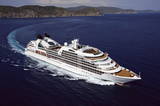
Cruise port Santa Clara Island
Info for port Santa Clara Island on 3 Feb 2028
Port information & tips for Santa Clara Island
Santa Clara Island is a pristine natural paradise in the Chilean Juan Fernández Archipelago and impresses with its wild, original beauty. Its location in the South Pacific lends the island a mystical atmosphere and, thanks to its striking volcanic cliffs and unique flora and fauna, offers an exclusive retreat for explorers. Highlights of the region include the protected biosphere reserve of the Juan Fernández National Park, the historic Mirador de Selkirk viewpoint, and the colonial ruins of the Fuerte Santa Bárbara fortress. As Santa Clara Island remains natural, cruise ships anchor in the picturesque Cumberland Bay and take guests by tender boat to the Muelle de San Juan Bautista, from where the charming town center of the main island is just a few steps away.
Santa Clara Island in the Chilean Juan Fernández Archipelago is not a classic cruise port, but rather an uninhabited, protected natural site visited as part of expedition cruises or special sea voyages. Traveling to the archipelago requires careful planning and usually takes place via the main island, Robinson Crusoe.
Airplane
For travelers from the DACH region, the journey begins with a long-haul flight to Santiago de Chile International Airport (SCL). From Santiago, the journey continues with a charter flight to the airfield on Robinson Crusoe Island (RCS), located about 670 kilometers off the Chilean coast. These flights, operated by small aircraft with 5 to 10 seats, take around 2 to 2.5 hours and depart from the FBO area near Arturo Merino Benítez Airport. They mainly operate during the high season from November to March or October to April. Due to strict baggage restrictions (often only 10 kg) and the weather-dependent nature of the flights, flexibility in travel planning is advisable.
Transfer & Further Travel
After landing at the Robinson Crusoe Island airfield, the journey continues to the main town of San Juan Bautista in Cumberland Bay via a boat transfer, which takes about one hour. From San Juan Bautista, organized boat excursions to Santa Clara Island are offered. As Santa Clara itself is uninhabited and has no infrastructure, Robinson Crusoe Island serves as the starting point for exploring this unique nature reserve.
Pre-Cruise Hotel
Due to the long journey from the DACH region and the weather-dependent charter flights to Robinson Crusoe Island, an overnight stay in a pre-cruise hotel in Santiago de Chile is strongly recommended. This allows for a relaxed start to the adventure, providing the opportunity to overcome jet lag and wait out any flight delays on the mainland before embarking on the final leg to the remote Juan Fernández Archipelago.
Check-in & Embarkation
Please note that you will generally receive a fixed time slot for check-in with your travel documents, which is binding for your embarkation. Accordingly, plan sufficient time for the journey to the port and take into account that the latest embarkation time - depending on the cruise line and destination - is usually scheduled about one hour before the planned departure.
The following also applies during the voyage: for shore excursions, you should be back on board at least one hour before departure. Always pay attention to the current announcements as well as the notices on board, as mooring and departure times may change at short notice.
Santa Clara Island in the Chilean Juan Fernández Archipelago is not a classic cruise port, but rather an uninhabited, protected natural site visited as part of expedition cruises or special sea voyages. Traveling to the archipelago requires careful planning and usually takes place via the main island, Robinson Crusoe.
Airplane
For travelers from the DACH region, the journey begins with a long-haul flight to Santiago de Chile International Airport (SCL). From Santiago, the journey continues with a charter flight to the airfield on Robinson Crusoe Island (RCS), located about 670 kilometers off the Chilean coast. These flights, operated by small aircraft with 5 to 10 seats, take around 2 to 2.5 hours and depart from the FBO area near Arturo Merino Benítez Airport. They mainly operate during the high season from November to March or October to April. Due to strict baggage restrictions (often only 10 kg) and the weather-dependent nature of the flights, flexibility in travel planning is advisable.
Transfer & Further Travel
After landing at the Robinson Crusoe Island airfield, the journey continues to the main town of San Juan Bautista in Cumberland Bay via a boat transfer, which takes about one hour. From San Juan Bautista, organized boat excursions to Santa Clara Island are offered. As Santa Clara itself is uninhabited and has no infrastructure, Robinson Crusoe Island serves as the starting point for exploring this unique nature reserve.
Pre-Cruise Hotel
Due to the long journey from the DACH region and the weather-dependent charter flights to Robinson Crusoe Island, an overnight stay in a pre-cruise hotel in Santiago de Chile is strongly recommended. This allows for a relaxed start to the adventure, providing the opportunity to overcome jet lag and wait out any flight delays on the mainland before embarking on the final leg to the remote Juan Fernández Archipelago.
Check-in & Embarkation
Please note that you will generally receive a fixed time slot for check-in with your travel documents, which is binding for your embarkation. Accordingly, plan sufficient time for the journey to the port and take into account that the latest embarkation time - depending on the cruise line and destination - is usually scheduled about one hour before the planned departure.
The following also applies during the voyage: for shore excursions, you should be back on board at least one hour before departure. Always pay attention to the current announcements as well as the notices on board, as mooring and departure times may change at short notice.
Access to Isla Santa Clara is directly via the waterway and offers convenient access to this protected natural paradise thanks to the ship's own logistics.
Zodiacs and Tender Boats
Landings on the coast are made with agile Zodiacs or tender boats that take you directly from the ship to the shore. This mode of transport allows for a flexible arrival and also offers initial opportunities for observing the local wildlife from the water.
On Foot
On the island, you travel exclusively on foot and explore the untouched landscape via natural paths. Thanks to the island's manageable size, you can reach the most important observation points and viewing platforms within a few minutes' walk.
Local Boats (Pangas)
Local pangas are available for the connection to the neighboring Robinson Crusoe Island. These traditional boats serve as the most important means of transport on the water and enable fast and authentic movement between the landing sites of the archipelago.
To experience the untouched beauty of Santa Clara Island and its surroundings at their best, a combination of unique nature observations directly on the coast and a visit to the cultural center of the archipelago is recommended.
San Juan Bautista
The charming village on the neighboring Robinson Crusoe Island serves as a lively gateway to the region and, thanks to its relaxed atmosphere, invites you to stroll through historic alleys and enjoy freshly caught lobsters in local restaurants.
Coastline of Santa Clara Island
The dramatic cliffs of the uninhabited island can be ideally explored on a boat trip and also offer first-class opportunities for observing rare seabirds and endemic plant species in a completely pristine environment.
Mirador de Selkirk
This historic viewpoint connects the fascinating legend of the castaway Alexander Selkirk with a spectacular panorama over the Pacific and is perfect for unforgettable souvenir photos thanks to the impressive far-reaching views.
Nature Observation on Santa Clara Island
A guided boat excursion along the rugged coastline of Santa Clara Island is perfectly accessible thanks to the short distances from the anchorage and offers you the exclusive chance to experience the rare Juan Fernández fur seals as well as numerous endemic bird species in a completely pristine environment. The fascinating volcanic landscape and the deep blue waters of the Pacific also create an impressive backdrop for nature lovers and photographers alike. Ideally, plan your excursion for the early morning to observe the wildlife in full activity at mild temperatures and return to the ship relaxed after this impressive nature experience.
The way back to the mooring point in Cumberland Bay is safe and relaxed to manage thanks to the manageable distances. The central location of the pier allows for a stress-free return to the ship and also offers good orientation on-site.
Cruise Line Tender Service
Since cruise ships in this region lie at anchor, the ship's own tender boats will take you comfortably back on board from the main pier (Muelle) in San Juan Bautista. The boats run at regular intervals, and the boarding area is easily recognizable at all times thanks to the presence of ship personnel.
On Foot Through San Juan Bautista
The paths in the main town are short and lead almost without exception directly to the coast and thus back to the pier. From central squares such as the Plaza de Armas, you can walk to the meeting point in a few minutes and simply use the time until departure for one last look at the bay.
Local Water Taxis (Pangas)
For individual tours to the surrounding coastal sections, local pangas are available, which will drop you off directly at the pier. These boats can be easily organized through local providers in the port area and also ensure a punctual return for the last tender of the day.
In port on 03 Feb 2028